
Scoot
Feature redesign of airline mobile app


RumA
An AI-native smart living experience envisioned with intelligent, collaborative agent that proactively optimize home energy and environment, yet keeping human control as core.
An AI-native smart living experience envisioned with intelligent, collaborative agent that proactively optimize home energy and environment, yet keeping human control as core.
Client
Smart home owners/occupants
Client
Smart home owners/occupants
Scope
Home AX, UXUI, prototyping
Scope
Home AX, UXUI, prototyping
Type
SAAS - Smart living technology
Type
SAAS - Smart living technology
Format
Mobile app
Format
Mobile app
Year
2026
Year
2026
Designing a Trustworthy Intelligent System for
Energy-Aware Smart Living
Designing a Trustworthy Intelligent System for Energy-Aware Smart Living
Designing a Trustworthy Intelligent System for Energy-Aware Smart Living
Concept
Concept
Smart home feels less like a “control”, but more like a companion that understands you and keeps your routines simpler, reassured with transparent automation.
Smart home feels less like a “control”, but more like a companion that understands you and keeps your routines simpler, reassured with transparent automation.

Home Status Dashboard: Provides real-time device visibility, activity summaries and reassurance-focused feedback.
Home Agent: Proactively learns and assists remote recovery, ”Safe to Leave” validation and contextual/behavioral decision.


Remote Device Control Layers: Allow full access at anytime integrated with smart alerts in group or individual device action.
Routines: Supports context-aware presets and automation rules dynamically with scheduled tasks for everyday.


Insights: Simplified real-time statistics and highlights of high energy usage that guide efficient energy usage.
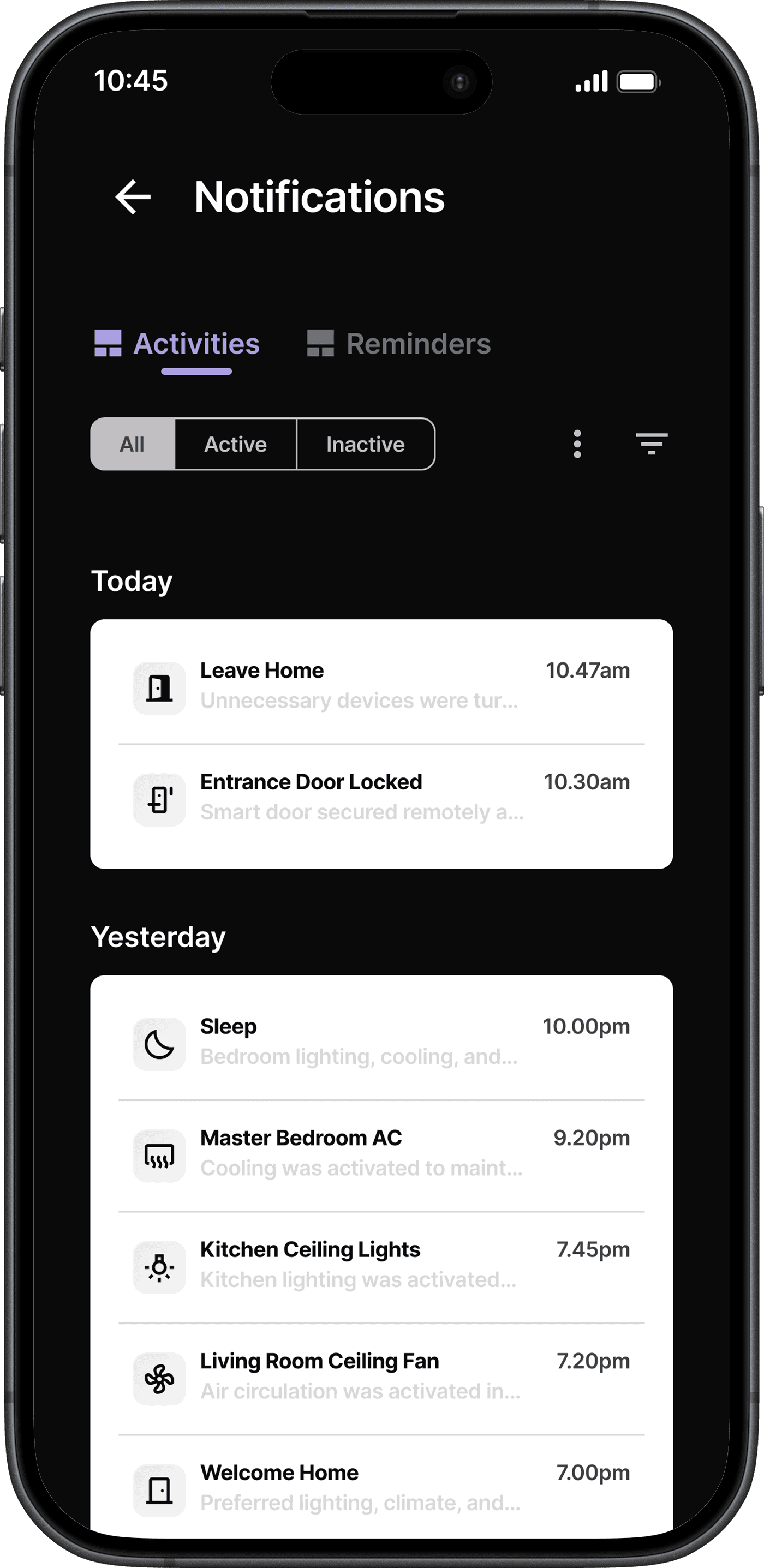
Notifications & Logs: Task transparency allow users to review, understand and control automation with reassurance.
Home Status Dashboard: Provides real-time device visibility, activity summaries and reassurance-focused feedback.
Home Agent: Proactively learns and assists remote recovery, ”Safe to Leave” validation and contextual/behavioral decision.
Remote Device Control Layers: Allow full access at anytime integrated with smart alerts in group or individual device action.
Routines: Supports context-aware presets and automation rules dynamically with scheduled tasks for everyday.
Insights: Simplified real-time statistics and highlights of high energy usage that guide efficient energy usage.
Notifications & Logs: Task transparency allow users to review, understand and control automation with reassurance.
Home Status Dashboard: Provides real-time device visibility, activity summaries and reassurance-focused feedback.
Home Agent: Proactively learns and assists remote recovery, ”Safe to Leave” validation and contextual/behavioral decision.
Remote Device Control Layers: Allow full access at anytime integrated with smart alerts in group or individual device action.
Routines: Supports context-aware presets and automation rules dynamically with scheduled tasks for everyday.
Insights: Simplified real-time statistics and highlights of high energy usage that guide efficient energy usage.
Notifications & Logs: Task transparency allow users to review, understand and control automation with reassurance.
Home Status Dashboard: Provides real-time device visibility, activity summaries and reassurance-focused feedback.
Home Agent: Proactively learns and assists remote recovery, ”Safe to Leave” validation and contextual/behavioral decision.
Remote Device Control Layers: Allow full access at anytime integrated with smart alerts in group or individual device action.
Routines: Supports context-aware presets and automation rules dynamically with scheduled tasks for everyday.
Insights: Simplified real-time statistics and highlights of high energy usage that guide efficient energy usage.
Notifications & Logs: Task transparency allow users to review, understand and control automation with reassurance.
How We Impact
How We Impact
We evaluated the mockup with 3 participants across both manual and agentic home recovery scenarios, the key qualitative findings include:
We evaluated the mockup with 3 participants across both manual and agentic home recovery scenarios, the key qualitative findings include:

From Control to Confidence
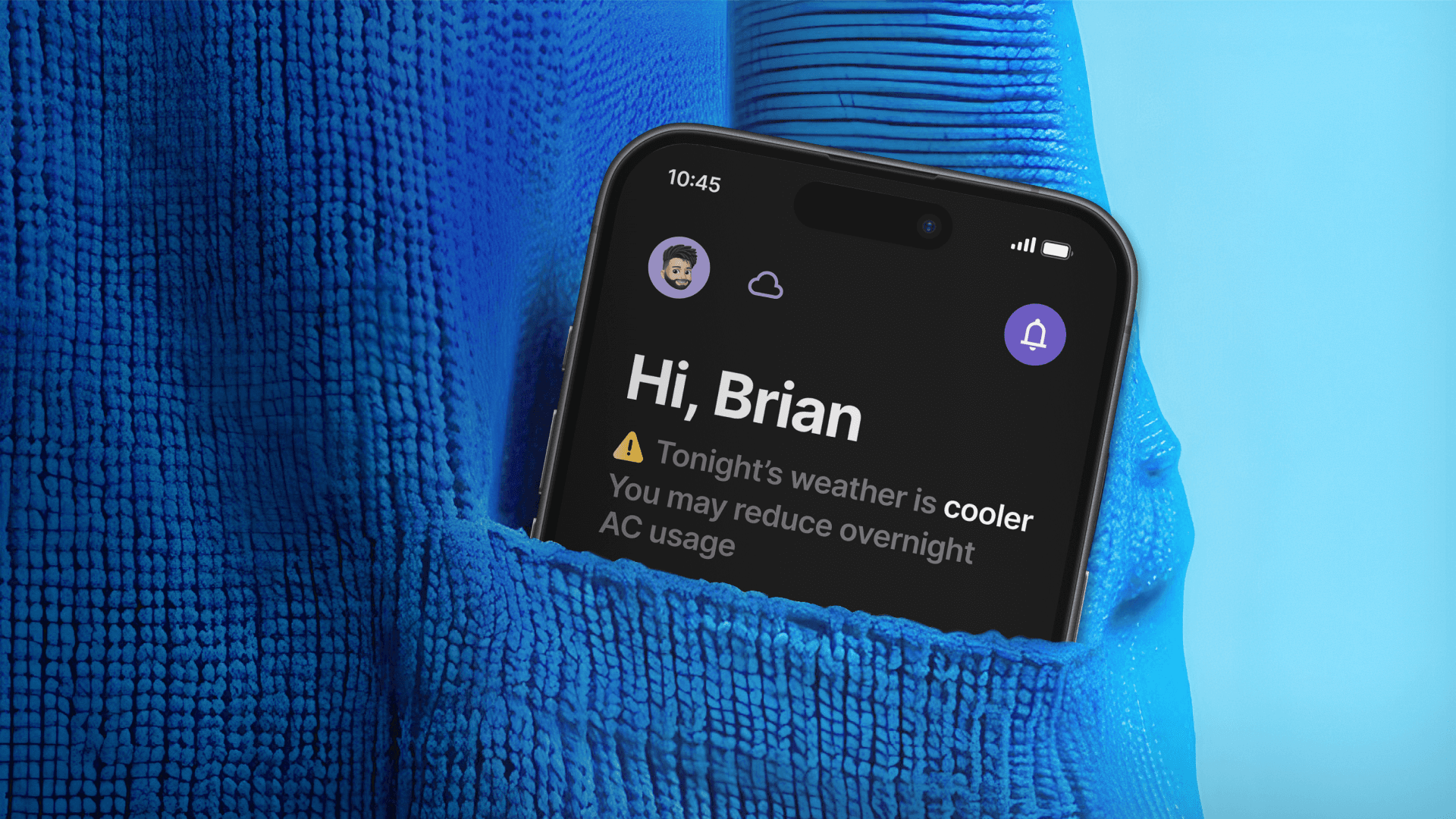
Built greater trust and comfort with proactive agentic decision-making over passive manual control in home management.
From Control to Confidence
Built greater trust and comfort with proactive agentic decision-making over passive manual control in home management.

Less Checking, More Living
Simplified home device coordination with lower cognitive load associated with real-time monitoring and reassuring checks.
Less Checking, More Living
Simplified home device coordination with lower cognitive load associated with real-time monitoring and reassuring checks.

Save Energy, Effortlessly
Encouraged energy-conscious living through timely, contextual guidance that aligns with lifestyle preferences.
Save Energy, Effortlessly
Encouraged energy-conscious living through timely, contextual guidance that aligns with lifestyle preferences.
Live Assured
Live Assured
Live Smart
Live Smart
Designed around how people live,
not how devices work
Designed around how people live, not how devices work
Design Phase Walkthrough
Design Phase Walkthrough
Background
Background
Discover
Discover
The hidden cost of everyday energy habits
The hidden cost of everyday energy habits
The hidden cost of everyday energy habits
As smart home grows alongside urban high-rise living across Malaysia and Singapore, managing energy consumption has become a daily behavioral and financial concern. Without clear visibility and timely intervention, energy usage often leads to unavoidable waste – the highest impact habits require remembering, and humans forget.
As smart home grows alongside urban high-rise living across Malaysia and Singapore, managing energy consumption has become a daily behavioral and financial concern. Without clear visibility and timely intervention, energy usage often leads to unavoidable waste – the highest impact habits require remembering, and humans forget.
Challenge
Challenge
Discover
Discover
We built device-centric smart homes,
but not living experiences
We built device-centric smart homes,
but not living experiences
We built device-centric smart homes,
but not living experiences
Despite the growing smart home adoptions, users fall back on manual control and underutilize smart devices as they struggle to configure and understand complex, fragmented ecosystem behaviours and automations.
These gaps limit usability, reliability and energy efficiency rather than providing reassured, comfort and energy-conscious living.
Despite the growing smart home adoptions, users fall back on manual control and underutilize smart devices as they struggle to configure and understand complex, fragmented ecosystem behaviours and automations.
These gaps limit usability, reliability and energy efficiency rather than providing reassured, comfort and energy-conscious living.
Research Analysis
Research Analysis
Discover
Discover
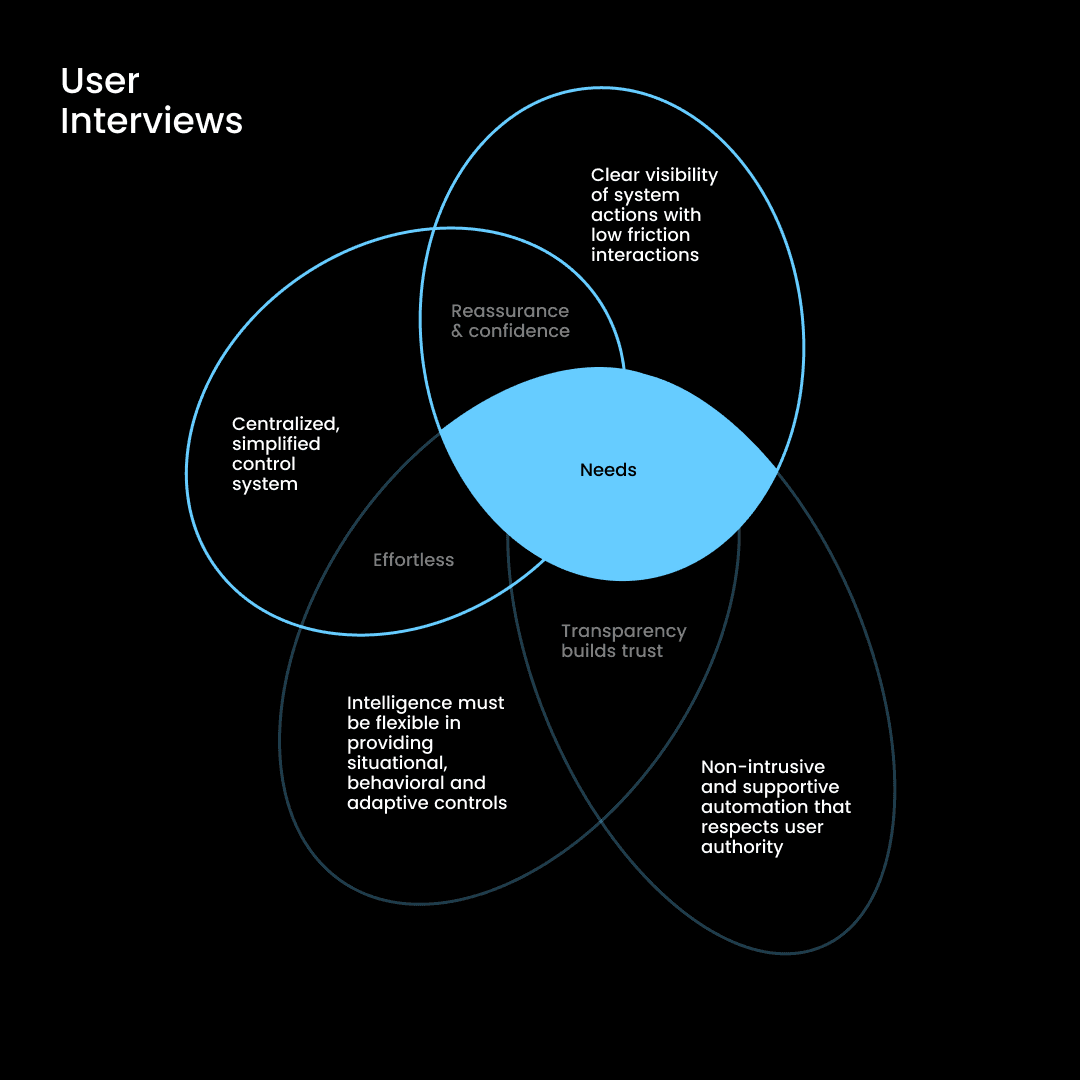
We evaluated interaction models across existing smart home ecosystems through competitive analysis and interviewed 5 participants ranging from urban residents (smart home/ non-smart home users) to Airbnb guests.
We evaluated interaction models across existing smart home ecosystems through competitive analysis and interviewed 5 participants ranging from urban residents (smart home/ non-smart home users) to Airbnb guests.
Synthesis of competitive analysis and
user interview insights
Synthesis of competitive analysis and user interview insights
Synthesis of competitive analysis and user interview insights
Current smart home solutions excel at device connectivity but fall short in delivering clear, simplified and context-intelligent experiences, indicating a potential gap in shifting product focus from command-based to proactive automation and assistance.
Users on the other hand prioritize reassurance, effortless control and transparency over advanced automation, highlighting the need for proactive supports under reassured controls that build long-term trust.
Current smart home solutions excel at device connectivity but fall short in delivering clear, simplified and context-intelligent experiences, indicating a potential gap in shifting product focus from command-based to proactive automation and assistance.
Users on the other hand prioritize reassurance, effortless control and transparency over advanced automation, highlighting the need for proactive supports under reassured controls that build long-term trust.


1 Pain Points
2
3
1 Pain Points
2
3
1 Pain Points
2
3
1 Pain Points
2
3
"I sometimes rush out and forget to turn something off."
Non-smart home user
"Turning back home just to switch off a device feels frustrating."
Non-smart home user
"I always check twice before leaving because I don't fully trust my memory."
Non-smart home user
"If I realize something was left on after I've left, there's not much I can do about it."
Non-smart home user
"Managing different devices across multiple apps feels inconsistent and confusing."
Smart home user
"Setting up and connecting smart devices feels too technical, so I often don't use all the available features."
Smart home user
"My automations follow fixed rules and don't always adapt to changes in weather, schedules, or daily routines."
Smart home user
"My presets work, but they don't really adjust to what's happening around me."
Smart home user
"I worry about my privacy if the AI has access to too much personal information and misunderstand what I want."
Non-smart home user
"My schedule isn't always the same, so I'm not sure if the system can keep up with changes."
Smart home user
"I sometimes rush out and forget to turn something off."
Non-smart home user
"Turning back home just to switch off a device feels frustrating."
Non-smart home user
"I always check twice before leaving because I don't fully trust my memory."
Non-smart home user
"If I realize something was left on after I've left, there's not much I can do about it."
Non-smart home user
"Managing different devices across multiple apps feels inconsistent and confusing."
Smart home user
"Setting up and connecting smart devices feels too technical, so I often don't use all the available features."
Smart home user
"My automations follow fixed rules and don't always adapt to changes in weather, schedules, or daily routines."
Smart home user
"My presets work, but they don't really adjust to what's happening around me."
Smart home user
"I worry about my privacy if the AI has access to too much personal information and misunderstand what I want."
Non-smart home user
"My schedule isn't always the same, so I'm not sure if the system can keep up with changes."
Smart home user
"I sometimes rush out and forget to turn something off."
Non-smart home user
"Turning back home just to switch off a device feels frustrating."
Non-smart home user
"I always check twice before leaving because I don't fully trust my memory."
Non-smart home user
"If I realize something was left on after I've left, there's not much I can do about it."
Non-smart home user
"Managing different devices across multiple apps feels inconsistent and confusing."
Smart home user
"Setting up and connecting smart devices feels too technical, so I often don't use all the available features."
Smart home user
"My automations follow fixed rules and don't always adapt to changes in weather, schedules, or daily routines."
Smart home user
"My presets work, but they don't really adjust to what's happening around me."
Smart home user
"I worry about my privacy if the AI has access to too much personal information and misunderstand what I want."
Non-smart home user
"My schedule isn't always the same, so I'm not sure if the system can keep up with changes."
Smart home user
"I sometimes rush out and forget to turn something off."
Non-smart home user
"Turning back home just to switch off a device feels frustrating."
Non-smart home user
"I always check twice before leaving because I don't fully trust my memory."
Non-smart home user
"If I realize something was left on after I've left, there's not much I can do about it."
Non-smart home user
"Managing different devices across multiple apps feels inconsistent and confusing."
Smart home user
"Setting up and connecting smart devices feels too technical, so I often don't use all the available features."
Smart home user
"My automations follow fixed rules and don't always adapt to changes in weather, schedules, or daily routines."
Smart home user
"My presets work, but they don't really adjust to what's happening around me."
Smart home user
"I worry about my privacy if the AI has access to too much personal information and misunderstand what I want."
Non-smart home user
"My schedule isn't always the same, so I'm not sure if the system can keep up with changes."
Smart home user
"I sometimes rush out and forget to turn something off."
Non-smart home user
"Turning back home just to switch off a device feels frustrating."
Non-smart home user
"I always check twice before leaving because I don't fully trust my memory."
Non-smart home user
"If I realize something was left on after I've left, there's not much I can do about it."
Non-smart home user
"Managing different devices across multiple apps feels inconsistent and confusing."
Smart home user
"Setting up and connecting smart devices feels too technical, so I often don't use all the available features."
Smart home user
"My automations follow fixed rules and don't always adapt to changes in weather, schedules, or daily routines."
Smart home user
"My presets work, but they don't really adjust to what's happening around me."
Smart home user
"I worry about my privacy if the AI has access to too much personal information and misunderstand what I want."
Non-smart home user
"My schedule isn't always the same, so I'm not sure if the system can keep up with changes."
Smart home user
"I sometimes rush out and forget to turn something off."
Non-smart home user
"Turning back home just to switch off a device feels frustrating."
Non-smart home user
"I always check twice before leaving because I don't fully trust my memory."
Non-smart home user
"If I realize something was left on after I've left, there's not much I can do about it."
Non-smart home user
"Managing different devices across multiple apps feels inconsistent and confusing."
Smart home user
"Setting up and connecting smart devices feels too technical, so I often don't use all the available features."
Smart home user
"My automations follow fixed rules and don't always adapt to changes in weather, schedules, or daily routines."
Smart home user
"My presets work, but they don't really adjust to what's happening around me."
Smart home user
"I worry about my privacy if the AI has access to too much personal information and misunderstand what I want."
Non-smart home user
"My schedule isn't always the same, so I'm not sure if the system can keep up with changes."
Smart home user
"I sometimes rush out and forget to turn something off."
Non-smart home user
"Turning back home just to switch off a device feels frustrating."
Non-smart home user
"I always check twice before leaving because I don't fully trust my memory."
Non-smart home user
"If I realize something was left on after I've left, there's not much I can do about it."
Non-smart home user
"Managing different devices across multiple apps feels inconsistent and confusing."
Smart home user
"Setting up and connecting smart devices feels too technical, so I often don't use all the available features."
Smart home user
"My automations follow fixed rules and don't always adapt to changes in weather, schedules, or daily routines."
Smart home user
"My presets work, but they don't really adjust to what's happening around me."
Smart home user
"I worry about my privacy if the AI has access to too much personal information and misunderstand what I want."
Non-smart home user
"My schedule isn't always the same, so I'm not sure if the system can keep up with changes."
Smart home user
"I sometimes rush out and forget to turn something off."
Non-smart home user
"Turning back home just to switch off a device feels frustrating."
Non-smart home user
"I always check twice before leaving because I don't fully trust my memory."
Non-smart home user
"If I realize something was left on after I've left, there's not much I can do about it."
Non-smart home user
"Managing different devices across multiple apps feels inconsistent and confusing."
Smart home user
"Setting up and connecting smart devices feels too technical, so I often don't use all the available features."
Smart home user
"My automations follow fixed rules and don't always adapt to changes in weather, schedules, or daily routines."
Smart home user
"My presets work, but they don't really adjust to what's happening around me."
Smart home user
"I worry about my privacy if the AI has access to too much personal information and misunderstand what I want."
Non-smart home user
"My schedule isn't always the same, so I'm not sure if the system can keep up with changes."
Smart home user
Problem Statement
Problem Statement
Define
Define
Insight
Users are aware of energy-saving practices but often fail to act consistently due to cognitive load, distractions, and lack of real-time visibility.
Need
Users need to effortlessly monitor, manage and receive assistive support for their home in real time, with the ability to control remotely.
Point of View
Users need an intelligent and reassuring home assistant to reduce stress and energy waste from unreliable manual routines.
How Might We
How might we assist users to feel confident and in control managing their home, while supporting intelligent energy-efficient behaviors?
1 Energy
2
3
Insight
Users are aware of energy-saving practices but often fail to act consistently due to cognitive load, distractions, and lack of real-time visibility.
Need
Users need to effortlessly monitor, manage and receive assistive support for their home in real time, with the ability to control remotely.
Point of View
Users need an intelligent and reassuring home assistant to reduce stress and energy waste from unreliable manual routines.
How Might We
How might we assist users to feel confident and in control managing their home, while supporting intelligent energy-efficient behaviors?
1 Energy
2
3
Insight
Users are aware of energy-saving practices but often fail to act consistently due to cognitive load, distractions, and lack of real-time visibility.
Need
Users need to effortlessly monitor, manage and receive assistive support for their home in real time, with the ability to control remotely.
Point of View
Users need an intelligent and reassuring home assistant to reduce stress and energy waste from unreliable manual routines.
How Might We
How might we assist users to feel confident and in control managing their home, while supporting intelligent energy-efficient behaviors?
1 Energy
2
3
Project Goals
Project Goals
Define
Define
We set out to redesign smart living as a trustworthy, energy-aware, and assistive experience
We set out to redesign smart living as a trustworthy, energy-aware, and assistive experience
We set out to redesign smart living as a trustworthy, energy-aware, and assistive experience
The design aims to transform passive, fragmented device management into a unified, adaptive intelligence that proactively supports everyday routines while keeping users confidently in control to build effortless, energy-conscious and reassured home living.
The design aims to transform passive, fragmented device management into a unified, adaptive intelligence that proactively supports everyday routines while keeping users confidently in control to build effortless, energy-conscious and reassured home living.
User Persona & Journey Mapping
User Persona & Journey Mapping
Define
Define
Users want automation confidence, system clarity and simpler control over smart devices
Users want automation confidence, system clarity and simpler control over smart devices
Users want automation confidence, system clarity and simpler control over smart devices
From user research and behavioral patterns, we identified two primary user archetypes—the habitual controller and the cautious adopter.
From user research and behavioral patterns, we identified two primary user archetypes—the habitual controller and the cautious adopter.


Feature Prioritization
Feature Prioritization
Define
Define
Agentic experiences are built on a balance of control, decision-making and trust
Agentic experiences are built on a balance of control, decision-making and trust
Agentic experiences are built on a balance of control, decision-making and trust
At the foundation of RumA is a unified Home Status Dashboard that powers the “Safe to Leave” experience, providing users with a real-time home/device visibility, actionable insights, and contextual recommendations facilitated by agent behavioral learning.
At the foundation of RumA is a unified Home Status Dashboard that powers the “Safe to Leave” experience, providing users with a real-time home/device visibility, actionable insights, and contextual recommendations facilitated by agent behavioral learning.


Sitemap
Sitemap
Develop
Develop
The user flows are configured into both manual and agentic experiences to support 3 core interaction scenarios: remote recovery flow (manual & agentic) and agent suggestion flow. These flows are designed to guide users recover from forgotten actions, making energy-aware decisions and evaluating trust in intelligent assistance.
The user flows are configured into both manual and agentic experiences to support 3 core interaction scenarios: remote recovery flow (manual & agentic) and agent suggestion flow. These flows are designed to guide users recover from forgotten actions, making energy-aware decisions and evaluating trust in intelligent assistance.


Wireframes
Wireframes
Develop
Develop
Wireframes focused on exploring how users could access critical recovery home status and actions with minimal cognitive effort. Multiple navigation and interaction concepts were explored to balance homepage displays, device management, control visibilities and agentic responds.
Wireframes focused on exploring how users could access critical recovery home status and actions with minimal cognitive effort. Multiple navigation and interaction concepts were explored to balance homepage displays, device management, control visibilities and agentic responds.

Prototype Improvements
Prototype Improvements
Develop
Develop
Design iterations were evaluated to determine the effectiveness of the homepage design through A/B testing. The main objective was to introduce a more task-oriented experience instead of a visually expressive dashboard – with enhanced visual clarity and information hierarchy of key actions that improve alert screening and decision-making.
Design iterations were evaluated to determine the effectiveness of the homepage design through A/B testing. The main objective was to introduce a more task-oriented experience instead of a visually expressive dashboard – with enhanced visual clarity and information hierarchy of key actions that improve alert screening and decision-making.

Usability Test
Usability Test
Deliver
Deliver
We recruited 3 participants for usability test to assess how users interact with RumA’s remote recovery experience, agentic automation flows and AI-driven smart home suggestions, which validates its success in delivering reassurance, effortless control, assistive intelligence and transparent automation within everyday smart living scenarios.
We recruited 3 participants for usability test to assess how users interact with RumA’s remote recovery experience, agentic automation flows and AI-driven smart home suggestions, which validates its success in delivering reassurance, effortless control, assistive intelligence and transparent automation within everyday smart living scenarios.

Learn & Iterate
Learn & Iterate
Deliver
Deliver
Users valued the assistance,
but needed more clarity
Users valued the assistance, but needed more clarity
Users valued the assistance, but needed more clarity
The findings suggest that RumA’s overall prototype successfully communicates a calm, assistive smart home experience with agentic conversational layer that is transparent, collaborative and proactive in providing energy-saving guidance, but requires stronger emphasis on:
1) interaction discoverability
2) reassurance visibility
3) conversational clarity for first-time users
The findings suggest that RumA’s overall prototype successfully communicates a calm, assistive smart home experience with agentic conversational layer that is transparent, collaborative and proactive in providing energy-saving guidance, but requires stronger emphasis on:
1) interaction discoverability
2) reassurance visibility
3) conversational clarity for first-time users


Agentic
Recovery
Manual
Recovery
Agentic
Suggestion
Agentic
Recovery
Manual
Recovery
Agentic
Suggestion
Agentic
Recovery
Manual
Recovery
Agentic
Suggestion
Next Steps
Next Steps
Deliver
Deliver

From pixels to experience,
let’s build it together
2026 brianchan
All rights reserved.
From pixels to experience,
let’s build it together
2026 brianchan
All rights reserved.
From pixels to experience,
let’s build it together
2026 brianchan
All rights reserved.